

The Digital Calibration Certificate (DCC) is a genuine game changer for process industries, bringing the ability to store and share calibration results in a standardized, consistent, authenticated, and encrypted manner. Is your business ready to reap the rewards of this latest step in the digital revolution? Sami Koskinen, Director, Digital Transformation at Beamex tells us all we need to know about this revolutionary concept.
I’ve seen huge changes in my 30 years in the calibration industry - changes that have helped to improve the way calibration is performed, the devices used to perform it, and the systems used to store the information. But when we get to the end of the chain, to the point where we have to generate a calibration certificate for a device, until now things haven’t really advanced beyond paper or PDF.
In what has traditionally been a conservative industry, paper has always felt cozy, safe, and familiar - a format that anyone can understand. If it ain’t broke, don’t fix it, right? But now that digitalization has started to make real inroads earlier on in the calibration chain - bringing far better accuracy and traceability - the push to digitalize the last step, the calibration certificate that holds the data, has become too powerful to ignore.
Table of contents
- The rise of the DCC
- We are sitting on a goldmine of information
- Let’s make traceability and trust Europe’s superpower
- The DCC is coming, but are you ready?
- Interested in learning more?
- Relevant DCC material & links
Key takeaways
-
Digital Calibration Certificates (DCC) are transforming calibration by replacing paper with structured, machine-readable data.
-
Reducing manual work improves efficiency and minimizes errors, speeding up calibration processes.
-
System integration enables seamless data flow between tools and platforms, supporting real-time use of calibration data.
-
Standardization ensures interoperability across laboratories, service providers, and customers.
-
DCC strengthens traceability, data integrity, and compliance while reducing administrative overhead.
-
Adoption is already underway, making early preparation key to staying competitive.
As automation increases, so does the need for calibration
Pharmaceutical and life science companies in particular have been leading the way in the drive to automate. More automation means more sensors, and more sensors means a greater need for calibration. Without a robust calibration process, there can be no trust in the measurements that these sensors take - and in heavily regulated industries like pharma, trust is everything.
At Beamex we’ve been working hand in hand with customers for five decades to help them automate and improve their calibration processes. Today there are better ways to perform calibrations, better ways to document the results, and better ways to extract value from calibration data thanks to digitalization.
But that last step, generating a calibration certificate, is still very much rooted in paper - or at best a PDF. You might have a third-party service company who leaves you a paper or PDF certificate and there’s no standard way to analyze or get value from the data in it. But there is a game-changing shift on the horizon.
The rise of the DCC
The DCC changes the game in calibration because it is a machine-readable certificate that can be easily accessed in a repeatable and error-free way. The valuable information these certificates contain can also be transferred in a standardized and fully digital format.
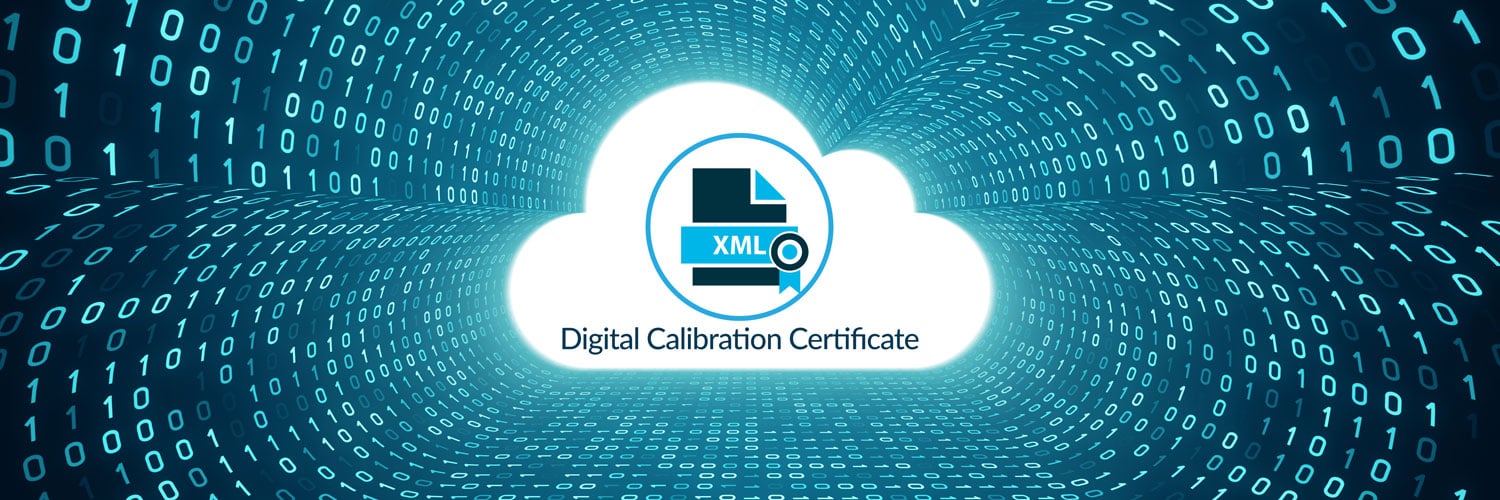
You can think of the DCC as the MP3 of calibration: a digital file based on XML that can be easily shared and read by machines. Beamex’s vision of the DCC process is based on cloud hubs. These would be industry-approved and different parties could connect and share DCCs in an XML format. In the hub, the DCC records are authenticated as valid, signed, and then delivered to the relevant customer.
This kind of cloud-based approach replaces point-to-point connections between companies and external providers, which require heavy investment and can be hard to change once they are set up. The cloud also has the added advantage of making things easily scalable.
Beamex has been involved in the efforts to develop a global DCC standard from the beginning, working together with National Metrology Institutes and key industry players like Testo, Endress & Hauser, and Siemens.
Together with Boehringer Ingelheim, the world’s largest privately owned pharmaceutical company, Beamex has taken things a step further, developing the first DCC proof of concept that is now available for selected applications.
Expert insight: Klaus Fickinger, Boehringer Ingelheim
Klaus Fickinger, Senior Manager, Global Calibration, shares his thoughts on the collaboration with Beamex:
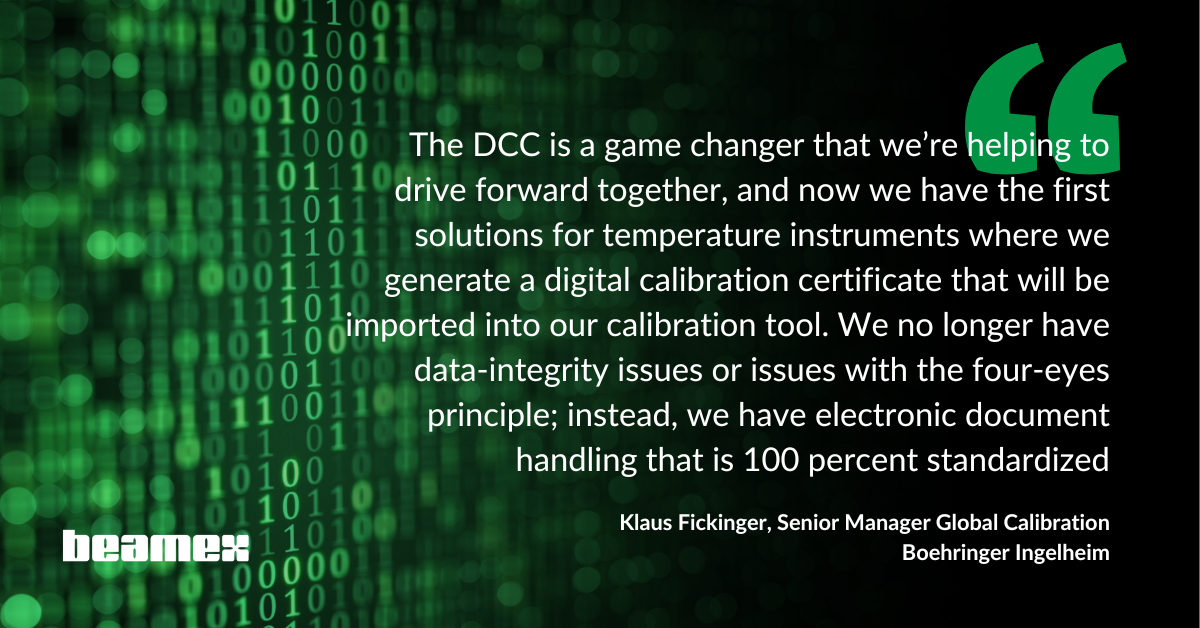
“The four-eyes principle still presents a challenge. How do we ensure that the values we measure are correct – all while striving to be more efficient and leaner. In a highly regulated environment like pharmaceuticals, we always have to provide proof that what we’re using is valid. To address these challenges, we need intelligent solutions.
“We perform 150,000 calibrations a year just in our production environment, and 20 percent of those involve sending devices out. We’re dealing with 50 external service providers delivering calibration results, and their paper or PDF certificates all look different. During inspections the transfer of external results into the calibration system is error-prone.
“When I saw the developments around the DCC I could immediately see the possibilities in it, so we launched the DCC Production project driven by PTB, the National Metrology Institute of Germany, and Boehringer Ingelheim. The project brought the big players in the pharmaceutical industry to the table – including manufacturers, service providers, and calibration management system providers like Beamex.
We are sitting on a goldmine of information
The main purpose of the calibration certificate - in whatever form it takes - is to prove that an instrument is providing accurate data and working as it should. But if the certificate is just filed away in a dusty cabinet and only dug out for an audit here or a troubleshooting process there, companies are not getting real value because it remains a static snapshot.
The DCC concept offers a way to benefit from the goldmine of information that calibration certificates contain. Because the information is in a machine-readable, easily transferrable format it can be analyzed to reveal how instruments behave under certain conditions over time. You can create trends, build dashboards, and start to unlock a whole new world of benefits that will help you to continuously improve processes. DCCs also unlock the opportunity to move to preventive, condition-based maintenance, which can save vast amounts of time and money.
As the DCC concept develops, it’s important to remember there are subtle complexities to consider. Let’s return to our MP3 comparison. The complexities in a piece of digitalized music are the different notes in the song. With a DCC the complexities are the different parameters being measured by the instruments being calibrated - such as pressure, temperature, and mass. To make beautiful music with the DCC, we need to harmonize these notes by establishing and sharing good practices for calibrations involving these different parameters.
Let’s make traceability and trust Europe’s superpower
Europe is leading the way in the democratization of data, and the DCC concept has a big role to play in making traceability Europe’s superpower. DCCs will help to build trust in the products we use every day by providing transparency. It’s much faster and easier to find what you’re looking for if calibration data is available on demand through digital search. This is especially helpful for audits.
With DCCs we can build a complete traceability chain from national metrology institutes all the way to product end users. By scanning a QR code on a product package, for example, we’ll be able to see where that product has been manufactured, where the ingredients came from, and even when the automation system that helped to produce it was last calibrated. This builds trust.
With visibility over the complete traceability chain we can also use the information to more accurately define uncertainties in the measurements taken along the chain. Every measurement is inaccurate to some degree, and the further down the chain you go the greater the uncertainty. With DCCs we can more easily dig out that information, define the uncertainties and improve measurement accuracy throughout the chain.
The DCC is coming, but are you ready?
If you want to be ready to reap the rewards of DCCs, you need to digitalize your calibration and other processes first - if you haven’t already. This doesn’t have to be expensive or complex. Beamex has been helping companies find a better way to calibrate for over 50 years and today offers cloud-based solutions with a low barrier to entry.
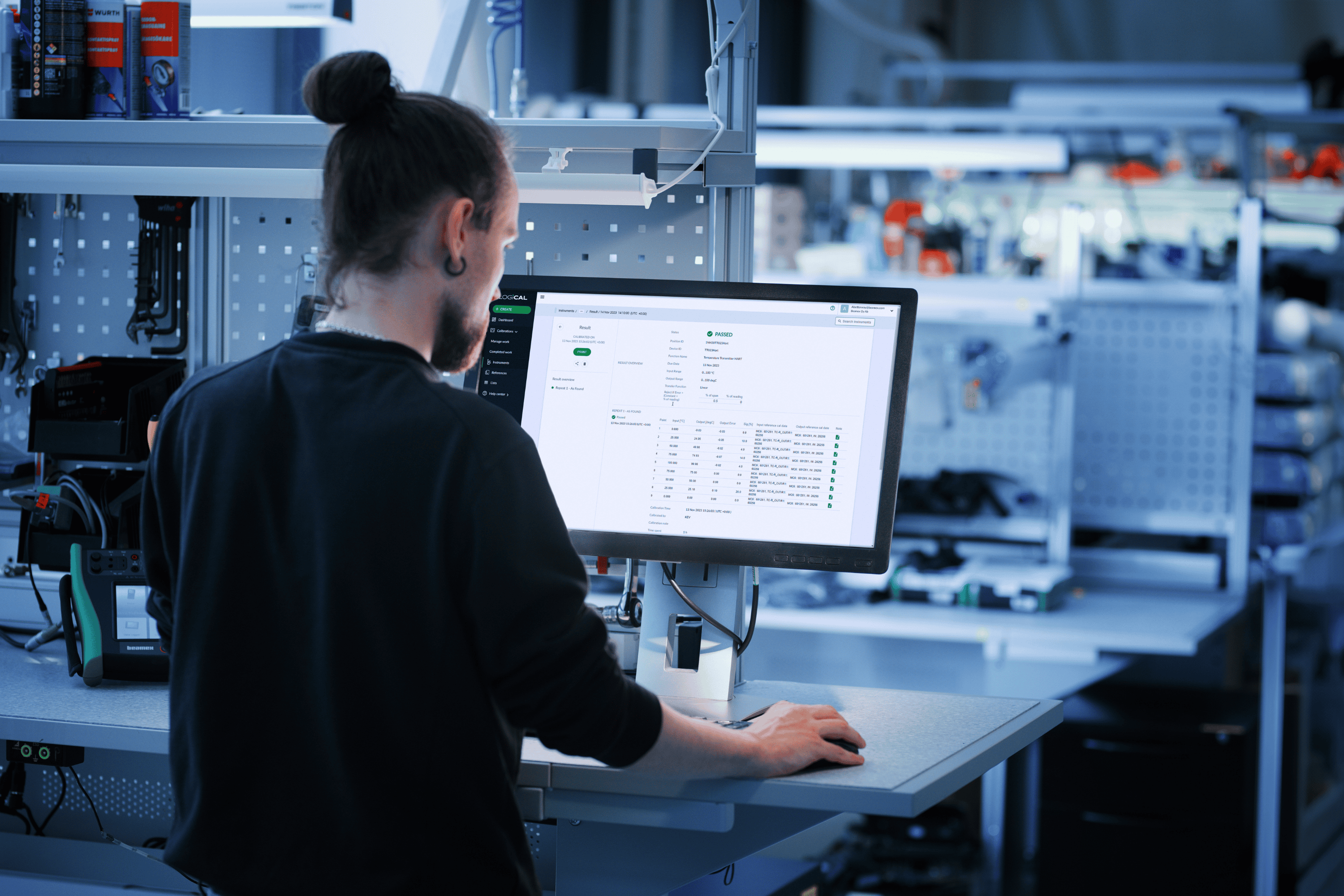
For example, Beamex LOGiCAL Calibration Management Software is an easy and affordable way to manage your instrumentation assets. With LOGiCAL you know what, when, and how to calibrate and can perform work orders efficiently. Your calibration data is stored in the cloud so you can access it anytime, anywhere, and you don’t need to invest in expensive on-premises IT infrastructure.
Almost every organization with automation systems and sensors will have some sort of computerized maintenance management system (CMMS) in place to manage their assets. You might also have an enterprise resource system like SAP that you use to schedule processes. These can be integrated with Beamex CMX Calibration Management Software, which provides a comprehensive, on-premises solution for gathering and storing calibration data.
With the Beamex calibration ecosystem you can eliminate the final, error-prone human data entry step associated with generating paper or PDF calibration certificates - whether you’re producing the certificates yourself or they are being provided by a third party.
Once the industry agrees on a harmonized ecosystem where calibration data can be shared between organizations in cloud-based hubs, we will all be speaking the same language and you will be able to reap the rewards of the DCC in full.
I’m proud of the work that has been done to reach this point on the DCC journey, and the role that Beamex has played in driving the development of the DCC together with standards institutions, national metrology institutes, calibration laboratories, and major players in the process industry.
If you’re already well on your way to a fully digital calibration process, let’s talk about how we can improve your process further and help you get full value from the hugely valuable information it generates. If you’re not sure where to start with digitalizing your calibration process, let’s sit down and map out how we can help you find a better way to calibrate with the Beamex ecosystem. The DCC is coming, and we’re more than ready to help you reap the rewards.
Interested in learning more?
If you want to learn more about the DCC or discuss with our experts, please feel free to book a discussion with them:
Learn more about calibration certificates in this blog post: What Is a Calibration Certificate? Everything You Need to Know >
In LinkedIn, feel free to connect and discuss with me or with my colleagues with expertise in DCC:
- Jan-Henrik Svensson, CEO, Beamex
- Antonio Matamala, Director of Sales, Germany, Beamex
- Ingo Müllner, Key Account & Project Manager, Germany, Beamex
- Tuukka Mustapää, Requirements Specialist on DCC, Beamex
Relevant DCC material & links
Documents describing the basic concept and overall structure of the DCC:
- S. Hackel, F. Härtig, J. Hornig, and T. Wiedenhöfer. The Digital Calibration Certificate. PTB-Mitteilungen, 127(4):75–81, 2017. DOI: 10.7795/310.20170403.
- S. Hackel, F. Härtig, T. Schrader, A. Scheibner, J. Loewe, L. Doering, B. Gloger, J. Jagieniak, D. Hutzschenreuter, and G. Söylev-Öktem. The fundamental architecture of the DCC. Measurement: Sensors, 18:100354, December 2021. DOI: 10.1016/j.measen.2021.100354.
Additional information on the technical aspects of DCC can also be found on the PTB’s Digital Calibration Certificate Wiki: Digital Calibration Certificate (DCC) - Wiki | Digital Calibration Certificate - Wiki (ptb.de)
Further reading on the potential and benefits of the DCC in a calibration ecosystem:
- J. Nummiluikki, T. Mustapää, K. Hietala, and R. Viitala. Benefits of network effects and interoperability for the digital calibration certificate management. 2021 IEEE International Workshop on Metrology for Industry 4.0 & IoT. DOI: 10.1109/MetroInd4.0IoT51437.2021.9488562.
- J. Nummiluikki, S. Saxholm, A Kärkkäinen, S. Koskinen. Digital Calibration Certificate in an Industrial Application, Acta IMEKO Vol. 12, No. 1 (2023). DOI: 10.21014/actaimeko.v12i1.1402.
Related blogs
If you liked this article, you might like these too:
- Digital Calibration Certificate (DCC) – What is it and why should you care?
- Automating the calibration management ecosystem
- Calibration management - transition from paper-based to digital
- Data Integrity in Calibration Processes
- Calibration Management and Software [eBook]




.jpg)
Discussion